

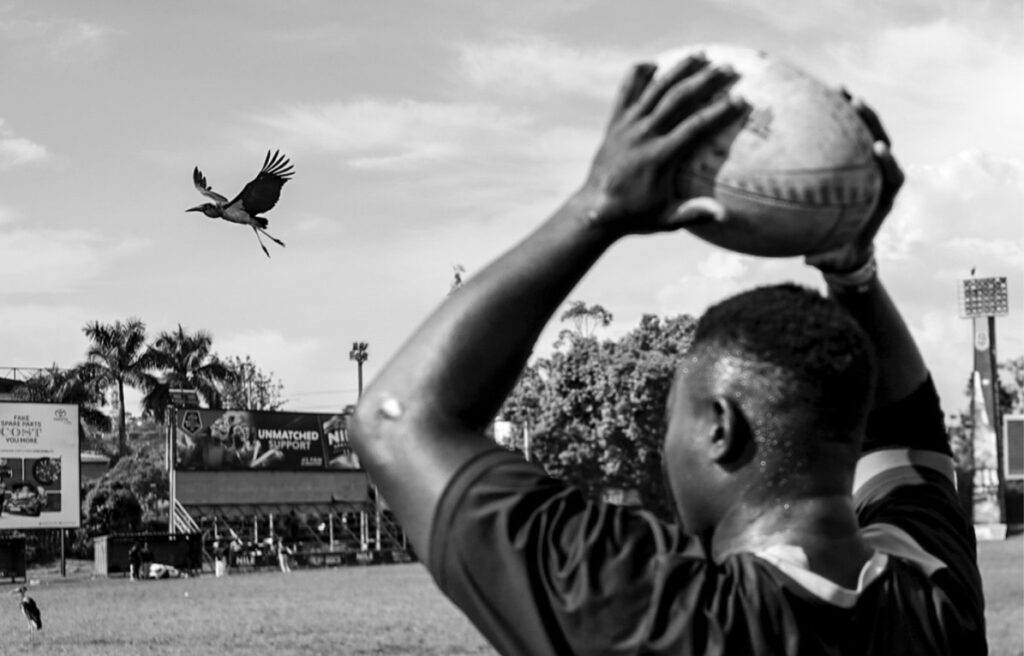
During our national team rugby training sessions at the camps, it was normal to run alongside kaloli, marabou stork. Honestly, I always had this fear of it turning and chasing me as a defense response. But thankfully, these birds’ largest defense mechanism is through display, such as having an aggressive look, loud bill snapping (clicking their beaks continuously), and inflating their throat sac.
Despite their normalized existence at the Kyadondo rugby grounds, where a number of national league games and national team games take place, I always wondered how they can be considerately chased away. By this, I mean, without poisoning them, but having an environmentally friendly way of relocating them.

It has been over two years since that experience, but recently, I learned something, and it felt like an Eureka moment.
“We have a hawk that is trained to scare away seagulls,” Dierdre O’Sullivan stated during our fourth Women’s Leadership Academy weekly session.
Dierdre O’Sullivan is the Head of Operations at World Rugby. Her response is what lit the bulb in my brain. Probably the solution to the marabou storks. This wasn’t the only revelation that surprised me.
Have you ever wondered why soccer, golf, and rugby fields have grass that looks so green? In fact, sometimes, as you watch games on television, it’s unavailable when an athlete, like a soccer player’s boot, lifts a lump of mud and grass on the field. This is because the fields look too good to be real grass. One may think it’s artificial turf.
“And then there is liquid seaweed we use to maintain the pitches,” Dierdire added.
I decided to read more about this, and indeed, I learned that grass gets stressed (I bet you also didn’t know that). The application of seaweed to grass is like the application of essential oils to your hair to help it obtain nutrients. I would have never imagined the role a weed plays in sports.
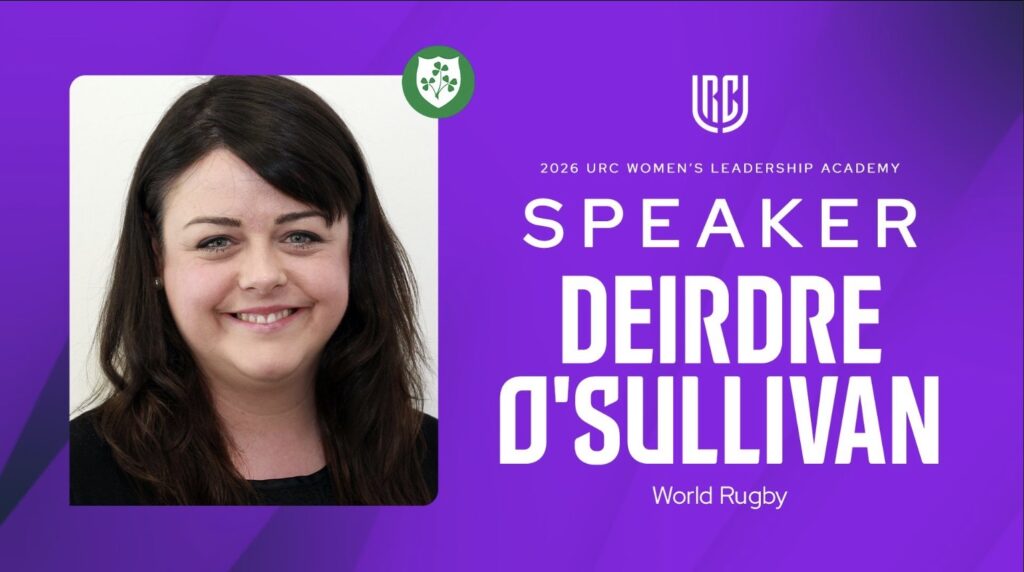
Dierdre’s session was largely about exposing us to the different job opportunities within the sports industry.
Dierdre was just one of the 11 lined-up speakers we got to learn from, engage with, and ask every wild question that our minds scripted.
Central to these decisions was hearing about the journeys of these women (and a few men) who have now become trailblazers and leaders in the sports industry.
Often, when someone says, “Women in men’s fields,” we assume STEM (Sciences, Tech, Engineering, and Mathematics). The assumption isn’t wrong, but it comes after a realization to think of other fields with sports leadership inclusive. This is because for centuries, the decision makers have been men in suits, with women often doing the secretarial or the bare minimum of refilling glasses with water.
However, being part of the United Rugby Championship Women’s Leadership Academy presented a huge opportunity to meet women who are thriving in “men’s fields.”
“When you engage with celebrities, talk to them on a human-to-human basis, and that’s when you will get the best out of them,” Hollie Davidson cautioned us during the first session.
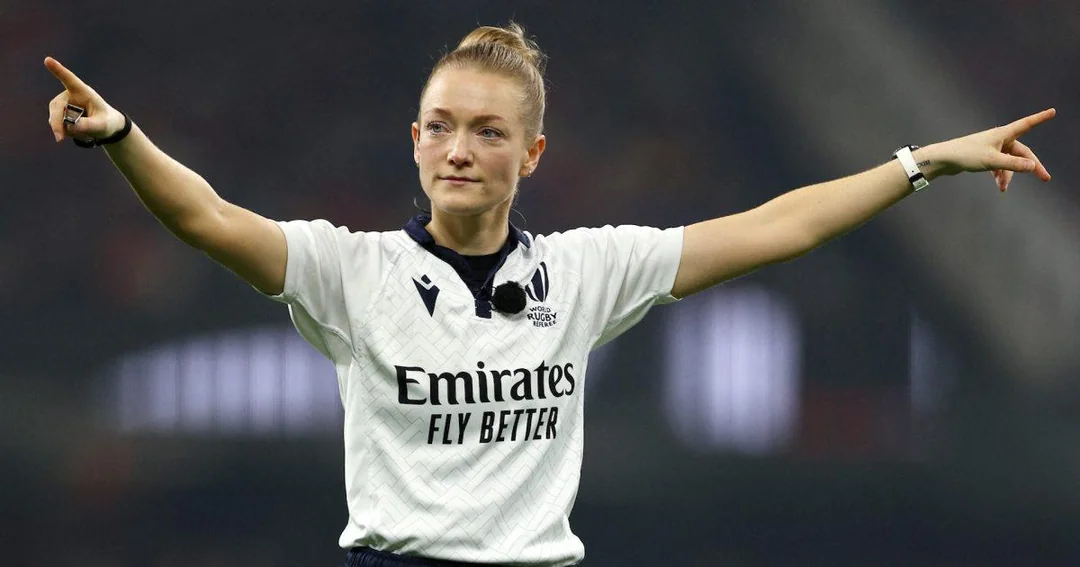
You may be wondering why she would be telling us as if we are preparing to meet celebrities (maybe we shall one day). When we are watching matches, and our team is losing (regardless of the game), there is a tendency to say, “Ah, that referee sucks.” Interestingly, when our team is winning, no one will even notice the presence of the referee. That’s Hollie Davidson’s story, the first full-time woman referee in the Scottish Rugby Union. This was the first of her many firsts as she has gone on to become a trailblazer. One of the achievements (among the many) has been officiating the All Blacks, the New Zealand national team.
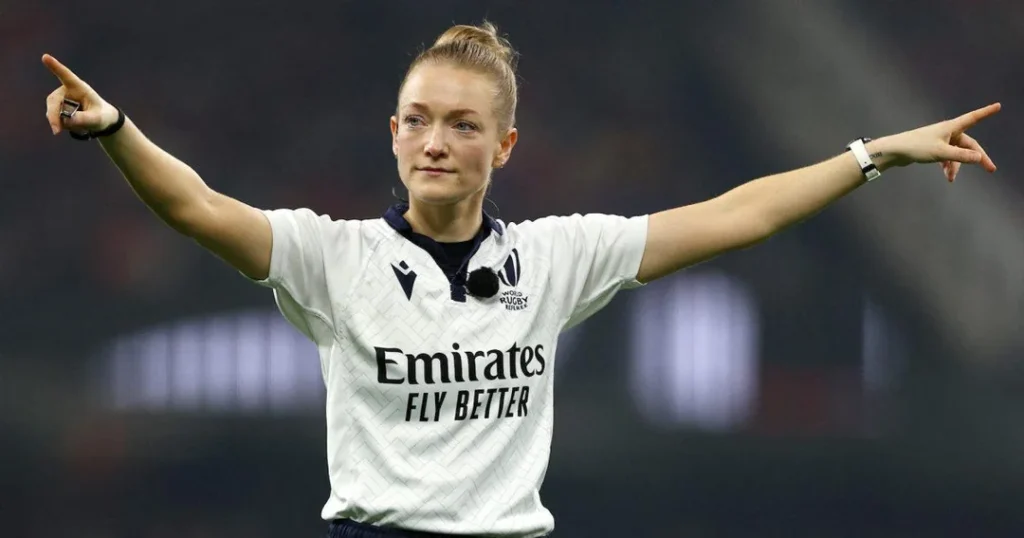
To a non-sports fanatic, that may not seem like a big deal. But I will break it down for you. The New Zealand national rugby team has been the world’s number one team for over a decade, until recently, when South Africa took over. When you think of men’s rugby at that level, we are talking of men over 100 kg (230 lbs) with a dominant physical presence. These games are high intensity, and decision-making from the players, coaches, and most of all the officials has to be a split-second decision. Imagine a 5”5, less than 80kg woman running alongside these men and making the tough decisions that will either cause the crowd to boo, or the players to be frustrated or get appreciated (it can go either way).
Hollie is at the disposal of public scrutiny, but then there are the likes of women like Michelle Wilson, who crack the billion-dollar deals we read about in the news. Have you ever wondered why the WWE became so popular in the 2000s? One of the strong forces behind its rebranding was Michelle, as she and her team built a strategy that saw the WWE turn from being one of the most resented sports (often labeled as archaic) to become a top ten sport globally. Michelle’s journey in sports leadership started abruptly after she had majored in chemical engineering and was preparing to go for a Master’s when she changed her mind to focus on sports business roles.
A little detour, I think one of the best pieces of advice I have received time and again has been, “Invest in yourself.” The first time someone told me this, it was in 2022, when a representative from NBPA (National Basketball Players Association) spoke to us during the Sports Business classes I took under the Basketball Africa League in Rwanda. Years later, my mentor would continuously hammer the same statement in my head, time and again, “Invest in yourself.” So listening to Michelle talk of her selling off everything to afford an MBA at Harvard kind of got me emotional, as I would like to believe I am currently in one of my toughest self-investment phases as I pursue an undergraduate degree in Sports Management.
Do you want to know something that will blow your mind? Often when we invest in ourselves or make sacrifices, we tend to believe that fate is now in our favour. Unfortunately for Michelle, once she completed her MBA, she went through what every Ugandan graduate has to go through – knocking on door after door, getting rejected, and having their shoes worn out.

I wish I could tell her story fully, but as we speak today, she is the founder and a co-CEO of Isos Capital Management, where she guides business investments for growth. Moreso, she serves as a board director and advisor for CVC. I know there are many terms to take in, but think of those big business deals you read about in leagues like La Liga, Ligue 1, Women’s Tennis Association, among others; she is one of the faces behind the scenes.
Those are just three women that I have highlighted. I wish I could do a deeper dive into all the other 8 women and one gentleman we hosted through the course of the 3-month learning program.
Throughout the sessions, I noticed one thing in common – imposter syndrome. We were fortunate that these women were vulnerable enough to share with us about this inner fear that has robbed most women (men do have it as well, but it is more dominant in women) of achieving their highest levels.
In fact, Megan Strang, who was one of our guests, pointed out, “Women apply for jobs when they meet 100% of the criteria, while men apply for jobs when they meet 60% of the criteria.”
You may wonder how she knows. Megan is a sports marketing and communications recruiter who runs her own company. She has seen it all (and yet to see more – after all, learning never stops) with the job market.
I don’t know about you, but from the interactions I often have with fellow women who are seeking career growth, usually, the burden of imposter syndrome is what stands between them and the next opportunity.
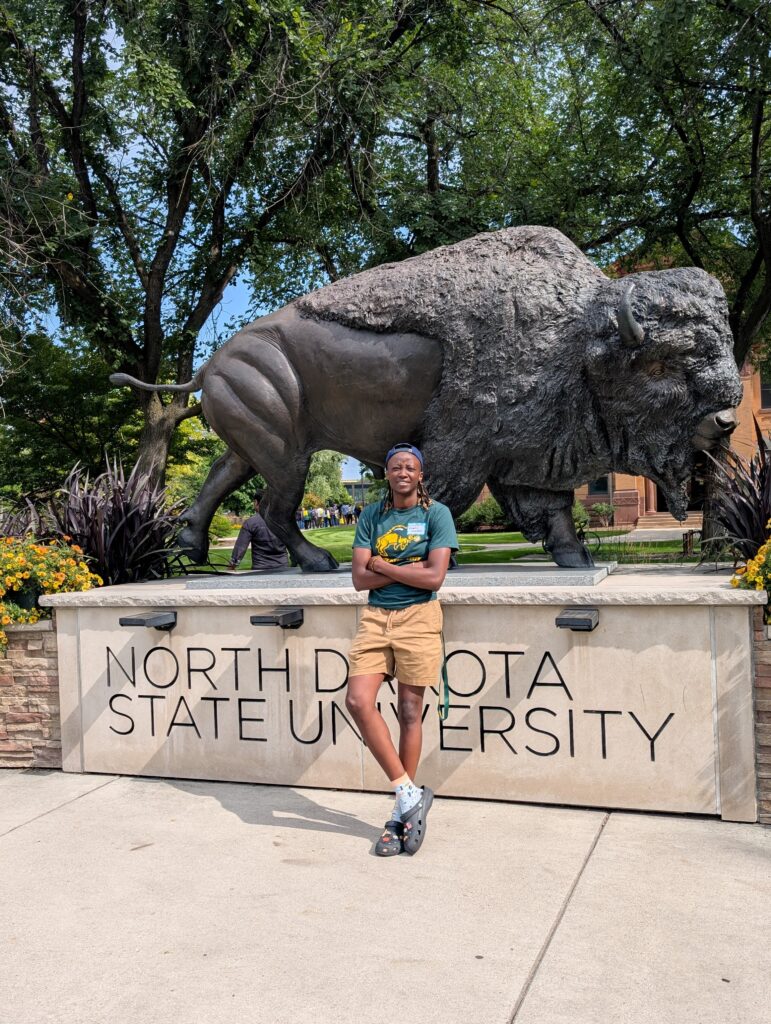
Actually, even me, I don’t know how many times I have to remind myself that I am not a fraud. I sometimes wish there were a pill one could take, and the syndrome just disappears.
Finally, I will leave you with a one-line piece of advice you could apply to your life from each of the 11 guests.
Hollie Davidson: “Have strong male allies.”
Matthew Thoma (Senior Digital Content Creator at URC): “If you don’t love your content, how do you expect others to love your content?”
Elma Smit (An award-winning sports presenter, content producer, and Account Director at Whisper): “Do you want to be right or do you want to win?” – You always want to win.
Dierdire O’Sullivan: “Fail fast, Learn quick, and have fun.”
Sue Butler (Head of Sports Media at S4C, a Welsh-language television channel) : “Always put your hand up and never say ‘That’s beyond my limit’.”
Megan Strang: “About rejection, it’s normal. You apply to 20 – 30 jobs, land 3 – 4 interviews, and get only one job. It’s normal.”
Niahm O’connor (CEO Western Force Rugby Club): “Everybody is winging it.”
Michaella Snoeck: “Playing by the book won’t take you far. Don’t think that if you do great, you will get a promotion. Advocate for yourself. Raise your hand.”
Ann Austin (Vice President of Philanthropy & Community Development at the WTA and Executive Director of the WTA Found): “Good people attract good people.”
Michelle Wilson: “If you want a job, go after it. If you want a promotion, ask for it. Never fear to raise your hand.”
Shira Kilgallon (Executive Producer with The Good, The Scarz, and The Rugby) : “You need a small committed group of followers, not 1000s of people.” – Side note: Shout out to everyone who continues to read, share, and engage with my blogs.
The URC Women’s Leadership Academy takes in only 50 women per year from around the world. This year’s delegates were from Australia, Canada, Denmark, England, France, Ghana, Hong Kong, Kenya, Lebanon, Luxembourg, Mauritius, Netherlands, New Zealand, New Ireland, Papua New Guinea, Scotland, South Africa, Thailand, Trinidad and Tobago, United States, and Wales. Beyond the learning experience, you get to build a network of women in sports leadership (at different levels). The applications open each year at the start of November. If you know a woman who is interested in growing in the sports leadership spaces, don’t gatekeep this article; share it with them so that they are on the lookout for the next opportunity.
WHILE YOU ARE HERE
Want to read more stories like this? Kindly subscribe to my blog. Big Foot Athletes is diversifying its content beyond the sports field to share lived experiences. Sports and charity will remain central to the blog’s content, but awareness and lifestyle have joined the conversation.
My book, Once I Arrived, will be out this year. It’s time you got lost in a book that tells you about the way of life in Uganda and in the USA through stories. I am excited about getting this book to your shelf.