

Usually, most of my articles have an average viewership of 100-200, but a good number of them reach highs of over 1000+. When I started writing about my ACL experience, majorly focusing on my thoughts throughout the process, I believed that was the worst viewership I ever received. I had to end the series of those articles because they were not gaining good traction.
Ironically, most of the athletes I have met online, especially those who have reached out to me, have done so because of those specific articles. It got me wondering why the articles with the least readership had some of the greatest impact. The answer didn’t have to be searched far and wide. It was as simple as the KNEE!
While on a call with a national team player back in Uganda, she said, “Liz, hold up. Someone has just posted that Maxine has passed on in the national team group.” I replied, “Ehh, I doubt. She is young. What could have caused her death?” How naive was my thought process!
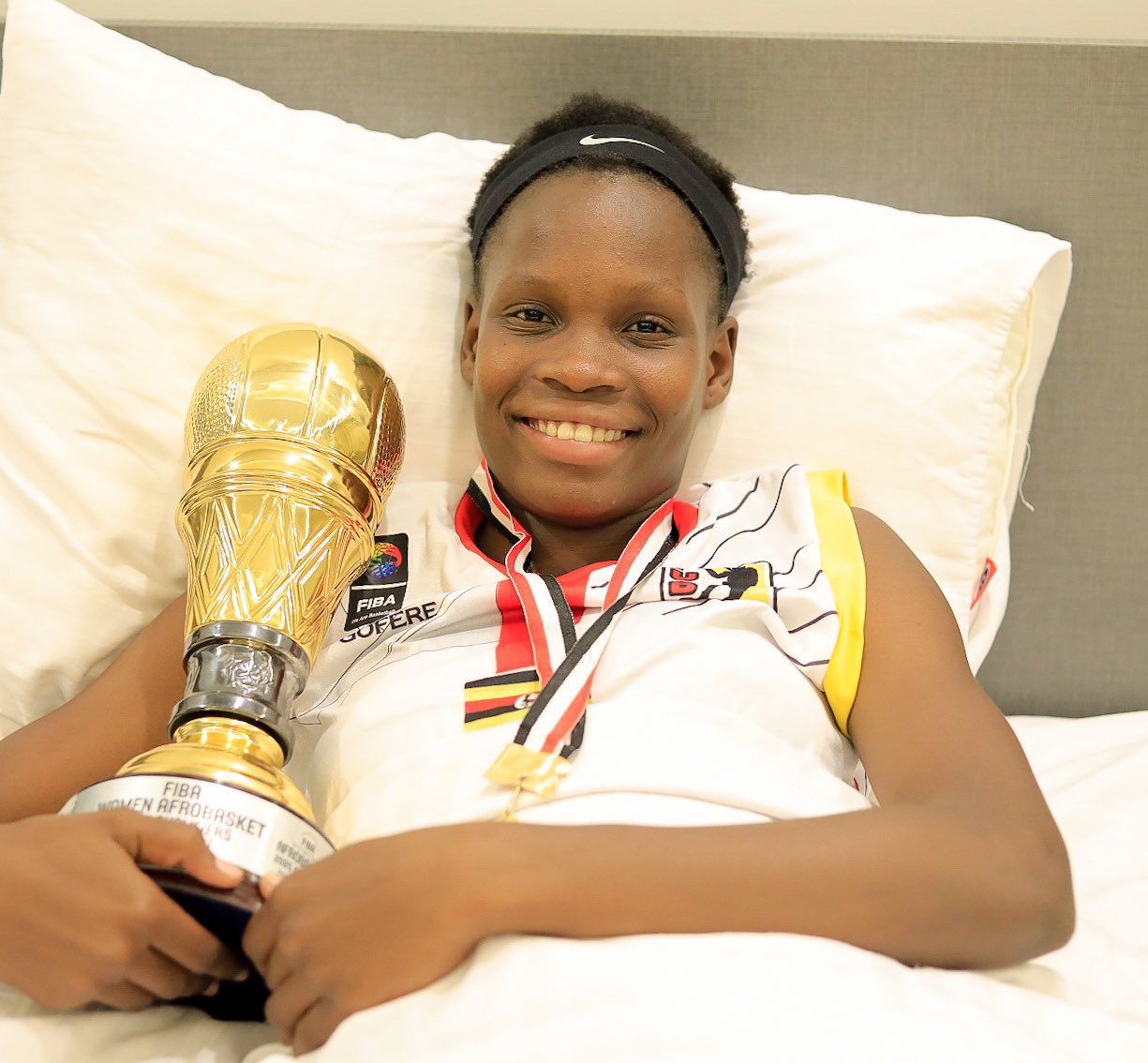
A couple of weeks ago, I had watched a video posted on X by St. Noa Girls where the young superstar Maxine played in a little drizzle as she shot a basketball. Maxine rose to stardom during the U18 games in Uganda in 2024. And further, her call-up to the national team at such a young age was also monumental.
I rushed to all the official basketball pages: the National Basketball League, the National Gazelle’s Page, FUBA Youth, and none had posted the news. For a minute, I believed it was false news. But again, who spreads false news about death? At that, in a national team group? I decided to check on the “banter” pages, which always have all the gossip, but still nobody had posted.
So I asked, “Have they confirmed what killed her?”
After a few minutes, it was confirmed. “A knee surgery.”
Suddenly, anger rushed through my body. And nothing makes me angry as much as something I don’t have control over, but I believe someone could have had control over.
My next question was, “Do they know the hospital that was performing the surgery?”
I waited for a while, and the message came through. I checked the hospital website.
Just to be sure, I asked again, “So what is the cause of the death?” To which I was told, “Anesthesia.”
I took a deep sigh, thinking about the three knee surgeries I have had. I was speechless.
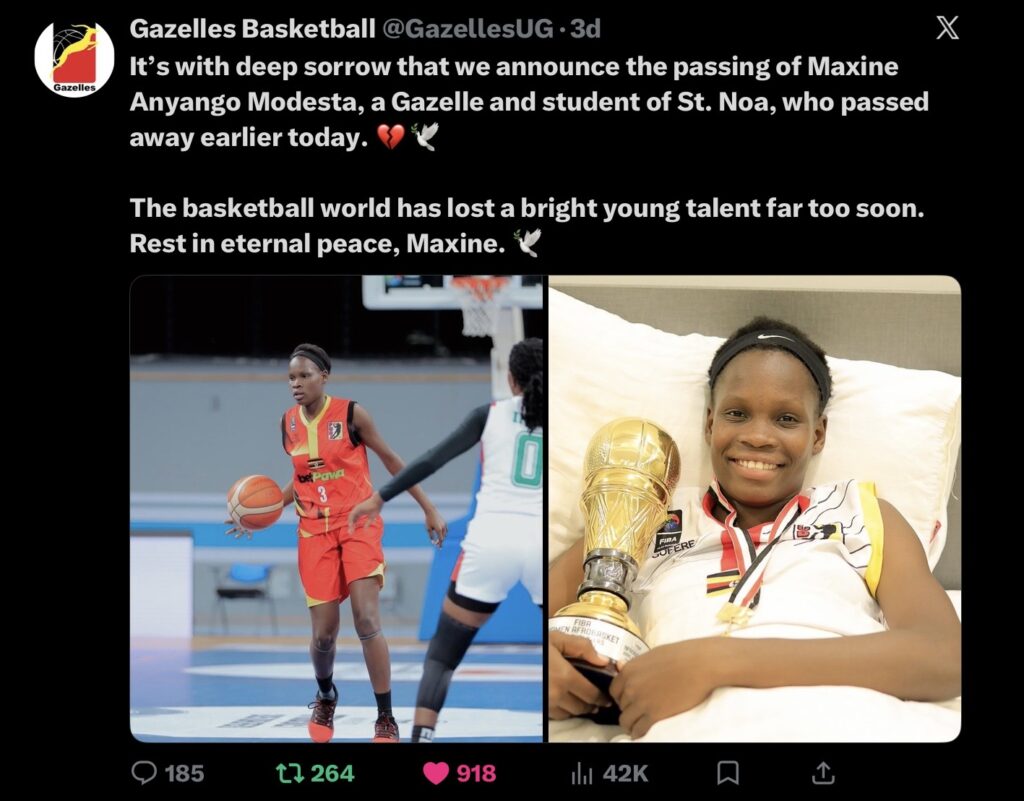
The news had now spread all over the internet. It was truer than I wanted to believe. She was barely 20 years old. I just silently said a prayer for her, “Eternal Rest grant unto her, oh lord, and may perpetual light shine upon her. May she rest in peace. Amen.”
I didn’t know who to direct my anger to, but I found myself mapping the Why Root Cause Tree. Wondering what could have been done to prevent this tragedy. And that’s how I ended up at the Ugandan Sports Federations.
Year in, year out, athletes are subjected to fear/worry or insecure working conditions. This may be done unconsciously or consciously, given that athletes in Uganda barely understand the power they hold over the governing bodies. This is not only in the basketball federation. This cuts across most leagues in Uganda. Athletes don’t have medical insurance to feel safe or guaranteed of what is next when they get injured. Athletes thrive on “Insha Allah” and “If God wills.”
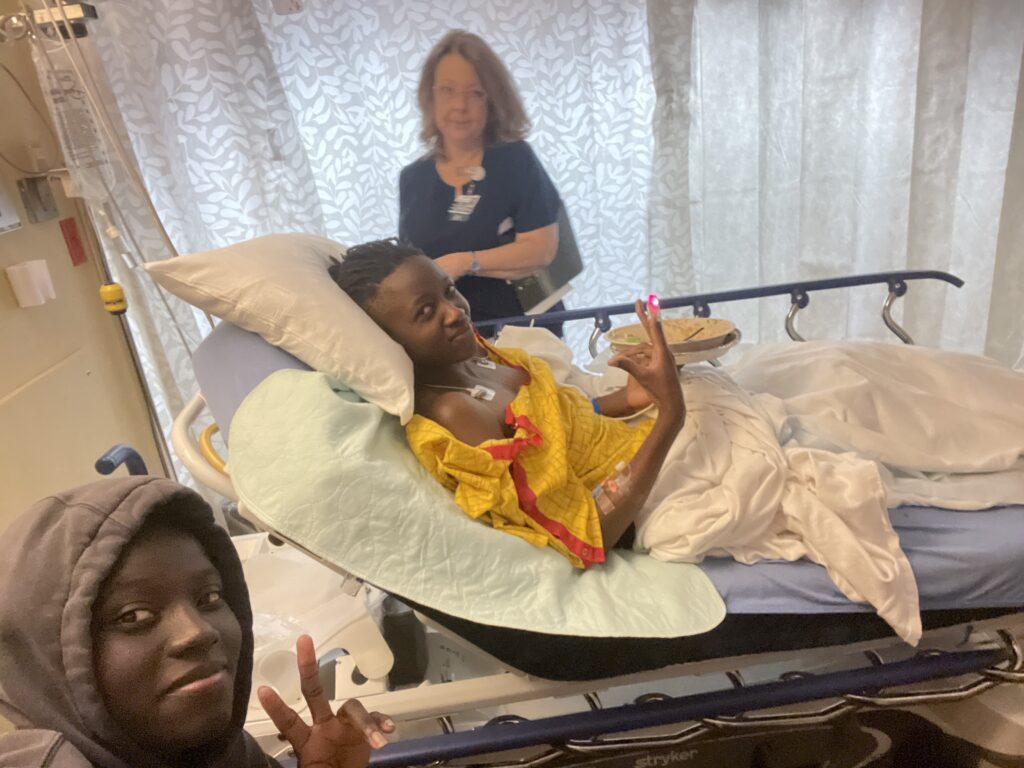
Each year, athletes are begging for donations to go and have surgery, especially knee surgery, which happens to be the most common surgery. Unfortunately, when you get to interact with these athletes, they will say, “Hospital X was charging me UGX 10,000,000, but I found Hospital Y, which said it could do the surgery at a subsidized cost (say UGX 8,000,000).” Nothing hurts more than hearing an athlete unwillingly state that they are choosing a cheaper option for the fix. It’s like building a 50-storey building using a cheaper architect or engineer.
How do Federations come in?
If there is a boom happening today in Uganda, it’s in insurance. This is a space most of our federations should have jumped into already. And yet the loud silence from stakeholders cannot be ignored.
Each year, every federation receives millions to billions of money from the government, in addition to the revenue collected from game days, sponsorships, or other league-related events. For example, FUFA (the football federation) receives the lion’s share at roughly UGX 17 billion (about $4.5 million), Motorsport and rugby each received an estimated UGX 3 billion ($797,512), with other federations left to share UGX 34.25 billion. (The official budget on the National Council for Sports couldn’t be retrieved).
The argument someone may throw around is that this money is budgeted for. But my question at hand would be, “What is it budgeted for if its key stakeholders are not protected?” These federations are there because of these athletes. If there were no athletes, these federations wouldn’t be there. So why not go ahead and protect the people who ensure their continuity?
I am an athlete in the USA, and there is nothing that brings pride to the school if its athletes are protected. This is what brings about the key collaborations between schools and local hospitals. Most schools are tied to a medical hospital within the town/city. Through the insurance companies schools work with, they are able to get great medical deals and turnaround time for their athletes. Turn-around time includes checkups, surgeries, therapy, and medical equipment, like knee braces, among others.
Which brings me to my question, “Why have our federations failed to make such deals with reputable hospitals in Uganda?” In fact, so many questions. “Why does an athlete have to look for a “deal” on their health while the leagues or federations continue to operate like one of their key stakeholders isn’t struggling financially and the biggest war at hand – mentally?” Why?
There is a concept in sports or in business generally called revenue sharing. This is where people or organizations in the same business carry each other’s burden to ensure the continuity or success of their industry, even if they are rivals or competing for the same resources.
In simple terms, if the Los Angeles Lakers can’t cover their overhead costs, the Denver Nuggets will give them some money to pay those bills (this is theoretical, just to explain revenue sharing).
So, if the argument at hand is that the basketball federation doesn’t have the money to get into a partnership with the most reputable hospital for athlete surgeries, why then can’t it come in hand with the other federations and draft a document into a partnership to collectively gather an amount of money to pay for insurance for Ugandan athletes? To make this more equitable, with revenue sharing, every federation brings what they can afford (of course, accountants and other financial experts do the maths).
For example, since soccer has the highest revenue from its fans and the biggest lion’s share, from the government, it brings 40%, then basketball brings 10%, then rugby brings 15%, and so on (netball, handball, hockey, and the rest all contribute according to what they have). Then, through this, a financial structure can be set up to ensure continuity of this collaboration among federations.
Through the collaboration, the federations can enter a partnership with a medical facility. For example, CORsu hospital has proven to be a space where most athletes have had successful knee surgeries. Disclaimer: this is not marketing for CORsu, but I have heard about their reputable work with athletes in Uganda, though they are costly and most athletes can’t afford them. They have also offered surgeries to some athletes at a subsidized fee. Entering a partnership with them (or any other identified reputable hospital) would be one of the biggest gifts any athlete in Uganda can have. The comfort or security of knowing that if I injure my knee, ankle, or shoulder, I have a reputable hospital to go to is a luxury every athlete deserves to experience.
Have you ever wondered how many athletes in Uganda didn’t make it to their peak because of these injuries? Or do you ever wonder if our leagues are not at their peak performance because athletes are wondering why they should put their bodies on the line for institutions that won’t pour back into them?
Hey, listen up, I am not God to know whether it was Maxine’s time to die or not, but I can tell you that there is something called preventative measures. Let’s not live in the ifs. There is a reason we wear seatbelts, even though we are not guaranteed of surviving a car crash (preventative measures).
The chances of dying during a knee surgery are as low as 1 – 4 deaths per 1,000 surgeries. The risk is higher for patients above 50 and higher for anyone above 80. We may once again argue that these statistics may be biased, given that research in developing countries is usually unpublished or not even done. But considering that we live in a global village, and in some circumstances, research done can be projected to other areas with adjustments in numbers, I would argue that the deaths per 1000 patients resulting from knee surgery can’t surpass 10. And if I am wrong, then our Ugandan medical system has a huge hole to fill.
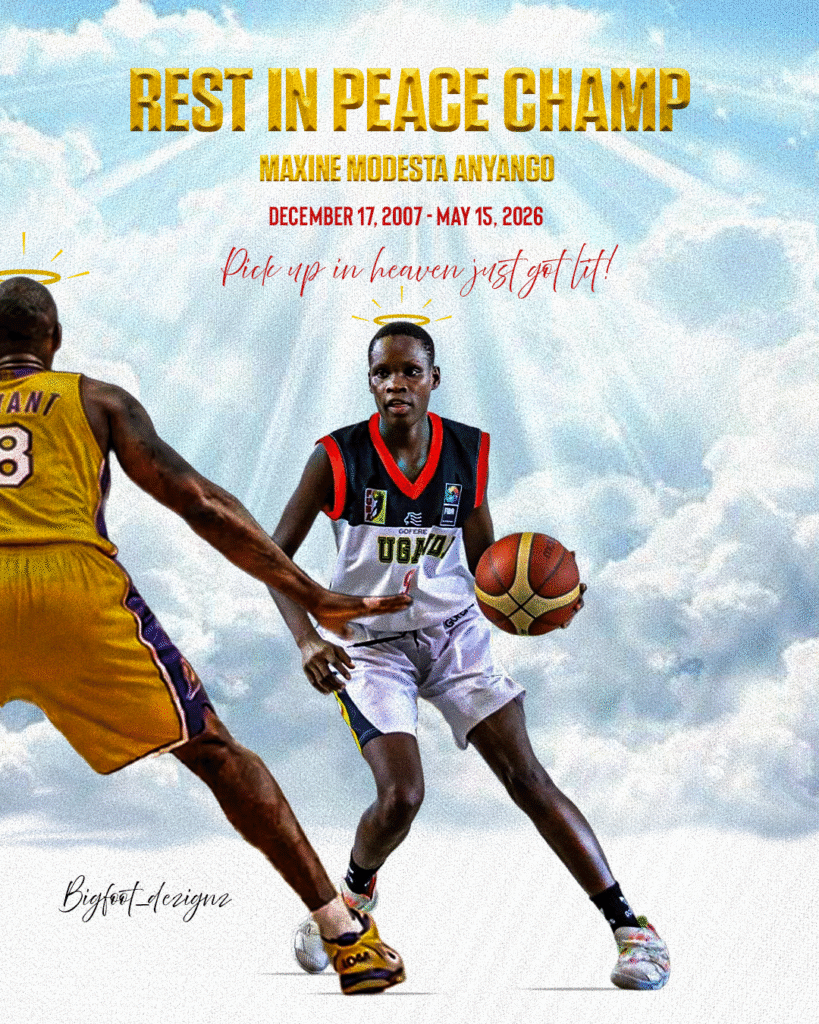
It’s my humble appeal to sports governing bodies to look into how they can make our sports spaces feel safer and secure for athletes. And it’s our duty as athletes to hold our leaders accountable to these things. Now that the late Maxine has been laid to rest, her story, just like every other Ugandan event that ideally should spark a form of action, will also be laid to rest. It will end with people nodding their heads and uttering, “It’s painful.”
A wise Ugandan once said, “Until we develop a backbone for each other, we shall continue having these struggles in Uganda.” Yesterday, it was that random rugby female athlete looking for UGX 10,000,000 to have surgery, today it’s that hockey player with a broken shin looking for UGX 7,000,000, tomorrow it’s that wheelchair basketball player looking for UGX 2,000,000 for physiotherapy, but the next day, it may be you, or not, or someone dear to you.
Just a side note: By the way, the insurance doesn’t have to cover all injuries, but it can cover the commonest injuries which occur in the most needed ligaments, the shoulders, knees, and ankles.
Rest in Peace Maxine Modesta Anyango. You were destined for greatness 🥹💔
WHILE YOU ARE HERE
Want to read more stories like this? Kindly subscribe to my blog. Big Foot Athletes is diversifying its content beyond the sports field to share lived experiences. Sports and charity will remain central to the blog’s content, but awareness and lifestyle have joined the conversation.
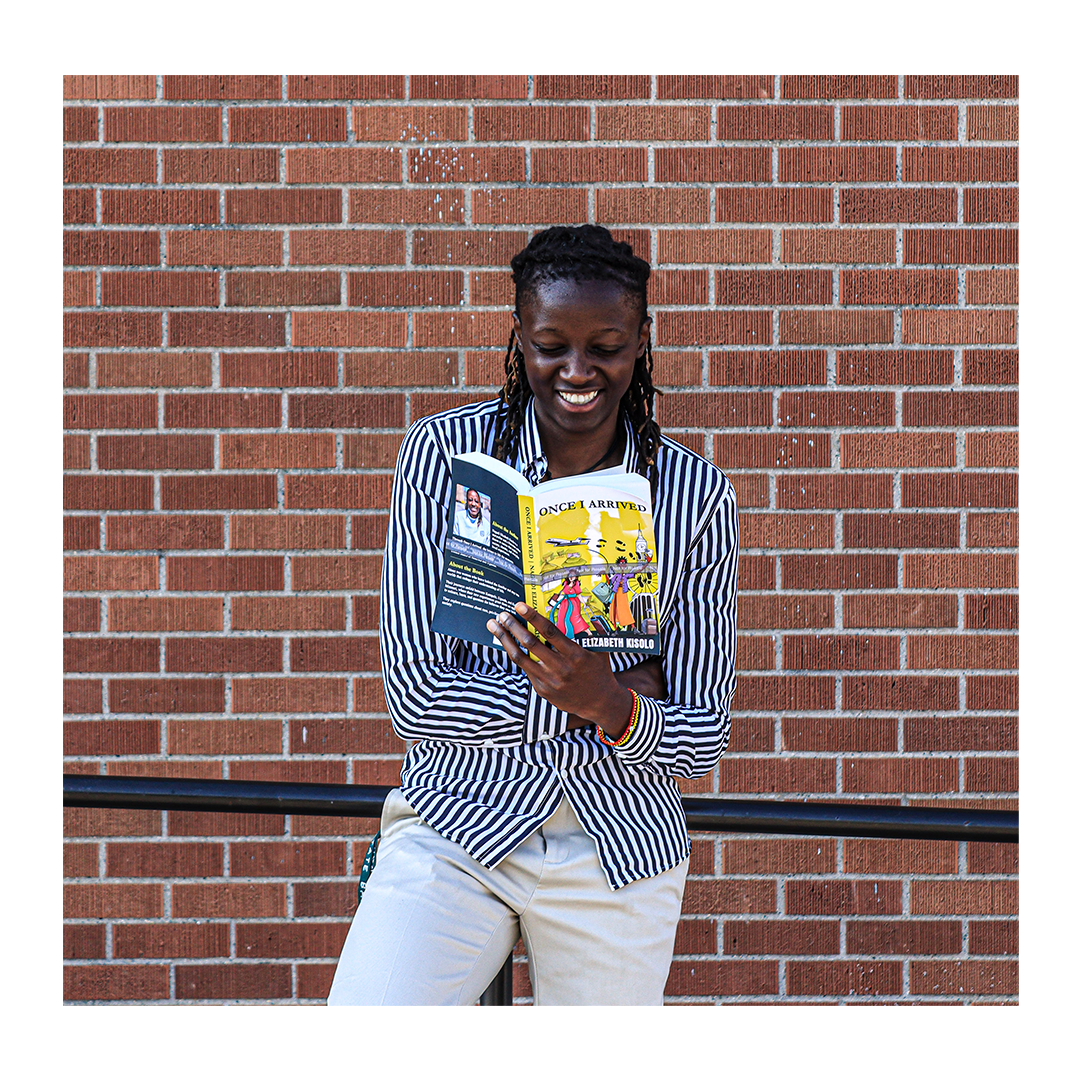
My book, Once I Arrived, will be out this year. It’s time you got lost in a book that tells you about the way of life in Uganda and in the USA through stories. I am excited about getting this book to your shelf.