My love of telling stories will one day lead me to tell a story I am not supposed to tell. But here we go.

Let me tell you about the player who was not the most decorated on court, but became one of the most valuable in tennis. The year is 1981, and somewhere in Russia a bouncy baby girl was born… hold up, I will be lying if I get this far in the story. So, let’s restart this story.
Before the Williams sisters, Osaka, Sharapova, Maja, and any other women’s tennis pro athletes you can name, there was an Anna Kournikova. In fact, as her stardom rose, she overshadowed other women’s tennis players such as Sharapova and the Williams sisters. Yet if I told you that her fame nearly had nothing to do with what you would expect to be famous for: tennis, you wouldn’t believe it. Her fame was so huge that by the mid 2000s she was the most-googled female athlete. By the way, by the mid 2000s she had retired from tennis (in 2003). This fame stretched throughout the decade (2000 – 2010) as the most Googled athlete. She even beat Angelina Jolie and Britney Spears in the most-searched women category.
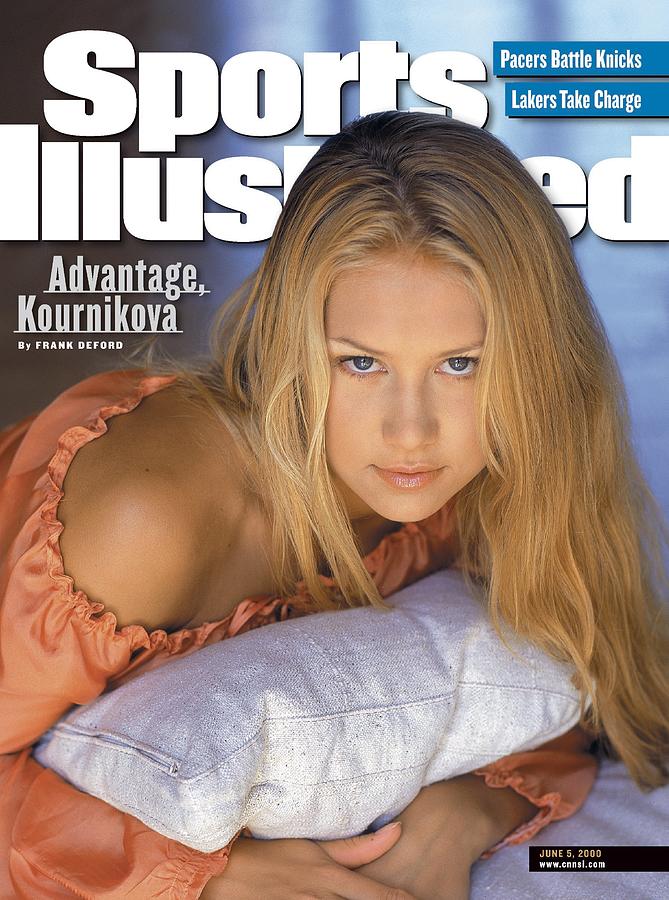
On top of her fame, in 2000 she tied with one of the greatest tennis players in earnings (endorsements, salaries, prize money), Serena Williams. Their earnings were estimated to be each at $ 10 million. Venus Williams, who was ranked 3rd that year, was estimated at $ 7.5 million. The craziest part of all this was that Serena was ranked 7th and Anna was 9th. The top two players, Lindsay Davenport (2nd), raked $ 6 million, and Martina Hingins (ranked 1st) collected $ 11 million. So why was a 9th-ranked player earning nearly as much as the top player?
I know you are wondering why I am talking about tennis in the 2000s. Recently, a famous political figure said, “We like Sophie Cunningham. I like Sophie. Yeah, you’d have a lot of men wanting to go and watch her. She is beautiful. You probably wouldn’t mind her on a team. Not to help you with points, but to help you with attendance. The attendance would be great. You have a lot of men wanting to go and watch her. She is beautiful.” Read this again and take it wholly.

Now think back to Anna Kournikova. Does it now make sense why she had all those earnings yet she NEVER won (EVER) a WTA (Women’s Tennis Association) singles Title? But she had 16 doubles titles. In tennis, for one to be a GOAT (Greatest Of All Time), they need to have won Grand Slam Titles (which she never did). Bet sometimes you come across titles like the Australian Open, French Open, Wimbledon, and the US Open. Those are the Grand Slam tournaments. The athletes playing in these tournaments are competing against the creme de la creme of women’s tennis.
Once again, I ask, why was a 9th-ranked player earning nearly as much as the top player? Let’s go back to our famous politician quote. His remarks caused a lot of stir and disgruntlement among women’s sports fans, equating them to “Objectification of women athletes.” They are right to be mad because, honestly, women athletes are usually sexually objectified regardless of their performance.
Let’s come to recent times. During my sports marketing class, our professor posed a question: “Do we really care about the physical looks of male athletes? Especially if we are looking at them in terms of marketing.” He then reversed it to women’s sports and asked, “Do we care about women athletes’ physical appearance?” I won’t respond to either question, but deep down you know the response, and it can be an ethical debate. We may want to argue over this, but let’s not forget that in sports marketing, and generally in marketing, whatever brings the publicity and the dollars is what will get fronted.
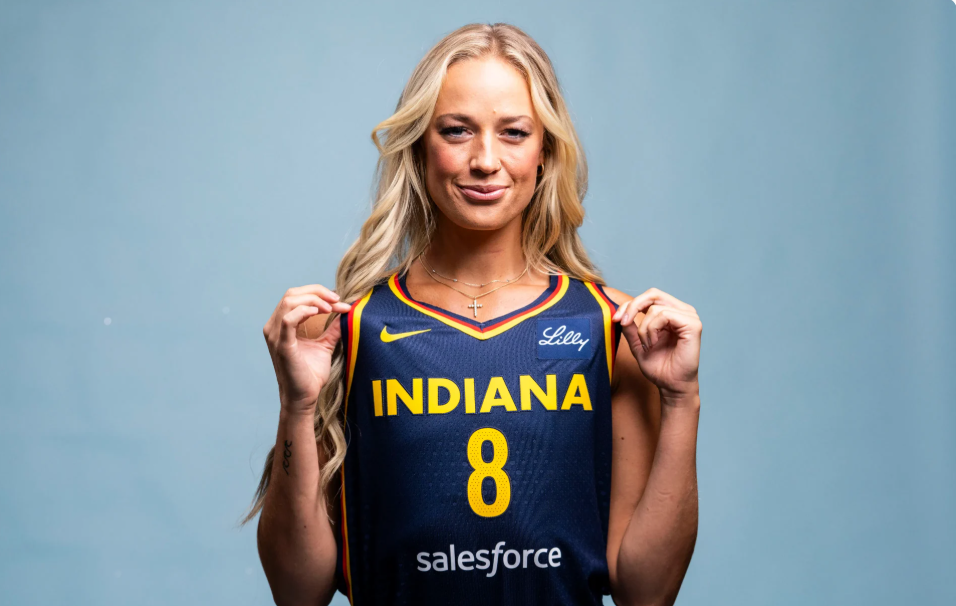
Sophie Cunningham is a pretty decent player. For example, for this concluded WNBA season, she averaged 7.9 points, 2.3 rebounds, 1.2 assists, and other statistics I won’t bore you with. In the WNBA, such statistics are fair but not peak to have the athlete in the media nearly every second of the day. Yet Sophie is always in the media even when she does nothing. In fact, when bloggers or news outlets are writing about something her teammate did, the title will most likely read, “Sophie Cunningham’s Teammate Bree Hall Gets Married.” In one way or another, the media will drag her into the story.
I won’t pick on any other player who is posting similar results because I am avoiding the central argument to the question, “Who is prettier?” In any case, beauty is in the eye of the beholder. But if you are interested, search any WNBA team and compare the media attention given to that player who is in the same performance category as Sophie.
Similarly, back to Anna, despite not being a GOAT, the media capitalized on her looks beyond the court to sell her. And that’s why she was able to earn so much. This may surprise you. Anna is married to Enrique Iglesias. Unfortunately or fortunately, “beauty” plays a big part in women’s sports.

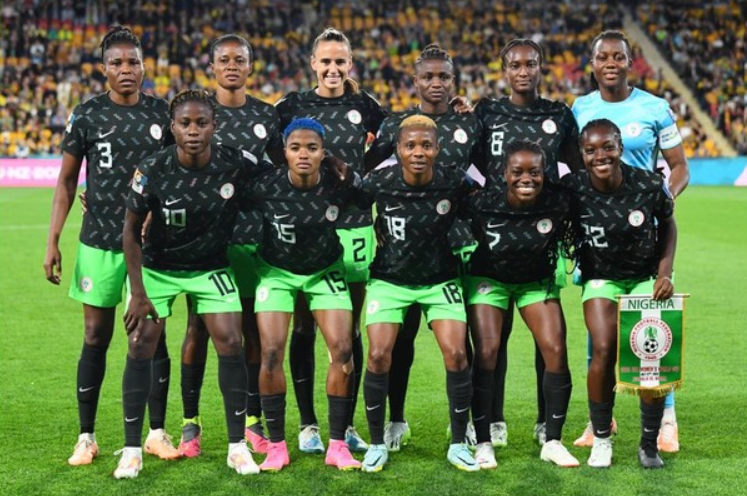
I will give another example. At the 2024 Olympics, I believe the viewership for the Nigeria women’s soccer team spiked beyond the ceiling.
Were they a talented squad? That isn’t even a question to be asked, as they are the Women’s Africa Cup of Nations winners 10 times. The highest any team has achieved.
Is this the reason their viewership and attention online increased? I wish it were the reason, but their viewership and publicity increased because of one of the “hot” girls on the team.
There are quite a few more examples in sports, but even in our day-to-day lives, we have all encountered and will continue to encounter situations where a woman’s beauty surpasses her abilities. If you may ask, “Is it wrong that marketing teams capitalize on this, especially in sports?” Unfortunately, I don’t know the answer to that, but remember sports is a business, and returns and profits are needed. Whatever publicity will bring the money is what the media will roll with.
Understanding these dynamics as a sports fan will ease how you view the marketing of women’s and men’s sports. A few years back, I would be mad over this, but with more acquired knowledge over the years about the sports industry, I have come to understand why. Is it ethically right? That’s up for argument.
This is one of those articles where I can’t conclude what is right or wrong because there are two sides to the debate. Maybe future generations will care to market men like they market women’s sports, or it may go the other way, paying no attention to the women’s looks but focusing on their skill sets.
Remember, whatever brings in the money through viewership, clickbait to websites and blogs, buzz, endorsements, ticket sales – name it all- is what will be fronted in the marketing. A wise man once said, if you are marketing a sports ticket and you have a “fan” who comes just to look at the cheerleaders in their skimpy outfits, you may as well sell the ticket to him.