

Recently I read a quote that sat deeply at heart. The quote read, “How silly of me to forget how far I’ve come, just because I still have far to go” (Takes a deep sigh). Does anyone else, especially in their twenties, sit down and wonder what they are even doing? I have specified the twenties, but one time I was chatting with one of my English professors while I was in Texas. I told her that sometimes I didn’t understand what I was doing, or even whether it made any sense. She laughed and said, “I am in my sixties, but I am still figuring it out.”
Does anyone ever figure it out?
In fact, figuring it out shouldn’t be our focus. Our focus should be the little steps we take to get to the top of the tower.
Back to my high school travel chronicles, where I had to move over 260 miles by bus to school. I took an eight-hour night bus from Kabale to Kampala. Once in Kampala, I would wait for the first ray of the sun to pierce through the clouds, and I would jump off the bus and rush to the taxi park for another 2-hour journey to Lugazi past Mukono. The taxi would leave me at the main road, and I would get a boda to the school’s upper gate on the hill.
I think back to these trips and wonder what was always running on my mind as I navigated the world at such an innocent age. Quite a number of events on these trips always reminded me of humanity. But one story always sticks out.
As usual, I boarded the bus from Kabale at around 9:00 pm. I sometimes had to wait for buses coming from Kigali to Kampala. If we left Kabale at around 9:30 pm, we would be in Kampala by 5:30 am. But of course, on most days the bus driver would be reckless, caring less about the traffic or bribing traffic officers along the road if caught speeding. At times, by 3:00 am or 3:30 am, we would be in Kampala.
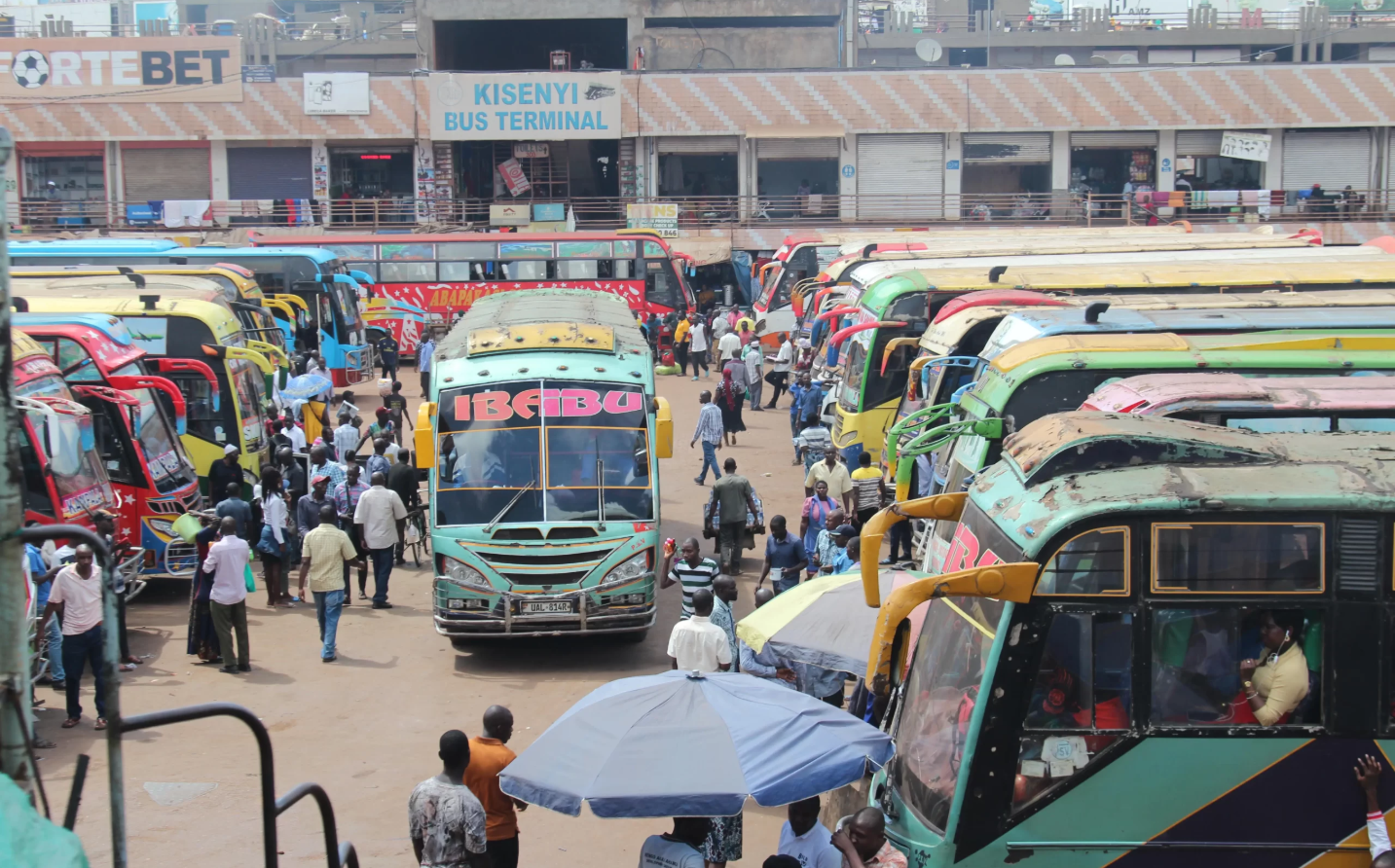
That particular night, the driver was one of those reckless drivers, cared less about the speed limit or humps on the road, and by 3:30 am we were in Kisenyi bus park. My father had taught me to always wait in the bus until there was enough sunlight to get out. Usually that would be around 5:40-ish, coming to 6:00 am. Daytime activities like vendors opening shops, taxis looking for clients, and bus brokers haggling with passengers would also be increasing. At the same time, nighttime activities, especially the half-naked women selling “meat” on the street and the hooded men collecting what didn’t belong to them, would be disappearing.
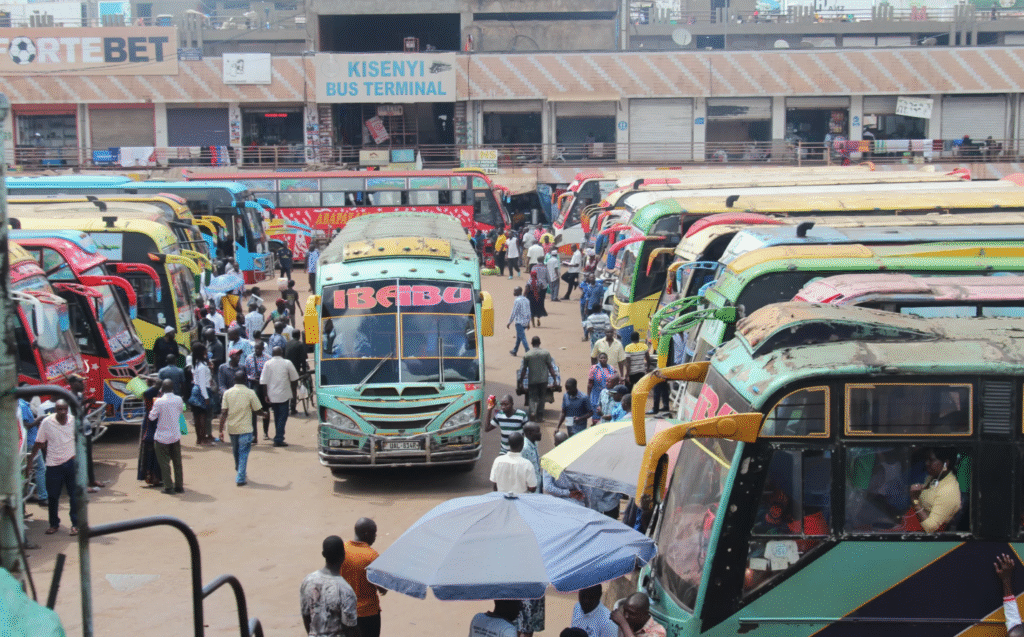
This night was different. As soon as we arrived, the bus driver disappeared, leaving the conductor. The conductor was joined by two other men who demanded that we all vacate the bus. This caused an uproar on the bus, with most passengers begging the men to allow us to remain on the bus until sunrise. The men didn’t listen to our cries. They claimed that the bus had a return journey to make to Rwanda early in the morning, so they had to wash the bus.
I remained in my seat until the last person was out. I thought I would have a chance to bargain my way to stay on the bus, but the men were not buying into my story. I picked up my backpack and carry-on and left the bus. To where? – I don’t know. Kisenyi balconies at the time barely had sitting areas for passengers. At night, the bus offices turned into sleeping rooms for bus brokers, luggage carriers, and stranded passengers.
I decided to walk to the balcony of the building to the right of the bus park as one exits Kisenyi. When I think back to this, I honestly laugh at my reasoning. I don’t know if anyone has tried moving through downtown late in the night (deep in the night past midnight). The balconies turn into homes for “street kids” – something like the homeless in the US. From afar, one may be convinced there are sacks of commodities laid out on the balconies, waiting to be loaded on the next bus, but in fact it’s people sleeping in them. I believed that sitting with them on that veranda, I would blend in and avoid getting robbed.
As soon as I sat down, a man came over and sat to my right. My heart was in my mouth. I was ready to give him whatever he wanted. It was like this wasn’t enough to scare life out of me. Another man came and sat to my left. One thing ran through my head, “This is the day the Lord has made to take me.”
“Gyebale,” the man to my right said.
Pause and laugh.
Guess who didn’t know how to speak Luganda. I fumbled and responded, “Gyebale.”
The guy to my left greeted me as well. To add insult to injury, the two men knew each other. They exchanged formalities using their street name aliases. I immediately concluded that they had come to kidnap me. This was around 3:50 am, very dark, save for the security lights from buildings hitting the streets. As my mind was thinking of the easiest way out, a third man came and sat next to the man on my right. He was friends with the two. I just said the words Jesus said on the cross, “It’s finished.”
“Okoola ki wano?” The man to my left asked why I was on the balcony, as he unwrapped a medium-sized bottle of Uganda Waragi.
I couldn’t gamble any more on Luganda words. So I told him I wasn’t good at speaking Luganda, but I could hear. I told him I was going to school in Lugazi. He took a sip and passed the bottle to the two guys on my right side. The other two men joined in the conversation as they each took a turn to sip on the alcohol.
By 6:00 am, I knew one had gone to Mengo Secondary School but dropped out after form four. One had gone to school in Eastern Uganda, and one had completed some form of technical school in Uganda. They had come to the balcony to rest before their morning hustles started. And their job – you know those people who linger around the bus park or taxi park, carrying luggage, fighting for clients to board the bus they are brokering for, and if opportunity arises, picking something from your bag if you become absent-minded- that was their job.
Throughout the conversation, they kept emphasizing, “Mwana sooma. Bwooba olina omukisa gwo kusooma, sooma.” – Please study. If you have the blessing to get educated, please use it. At one point, the guy to my right had asked if I drank, which I didn’t, and that became another lecture point. He told me how they had to drink to be “sober” for their jobs. The comfort alcohol brought to them. What started as a scary morning ended up as a pep talk from three strangers.
When the sun was out, they had to go to work, but first they offered, “Where are your bags to carry to the taxi park?” I had only two bags, so they agreed that one guy should carry them and the rest start working. I always traveled from Kabale dressed casually and would wear my school uniform before I boarded the taxi. So I told him to go on with his business, as I may delay him since I have to put on my school uniform in the public toilets. He brushed off my claims and escorted me to the public toilets, which were inside the bus park. We walked back to the bus park together, and headed for the public toilets. He waited outside with my bags as I changed into my green high-waist skirt, white-collared shirt and grey sweater. I was scared that I would find him gone with my property once I stepped out of the toilets, but to my surprise he was calmly waiting for me, like my father always did.
We then started the 10 – 15 minute walk to the new taxi park. Once we arrived at the park, he talked to the conductor (once again just like my father always did) and handed me over to the taxi. I pulled out UGX 5,000 (less than $2) to thank him. He rejected the money and replied, “Your safety and education matter most.”
I have never been so confused as to how events unfolded that night.
Nearly a decade later, I can’t even trace these three men’s facial features on paper, even if I tried to. After all, the greater part of our chat was in the shadow of the security lights on the streets. But it’s those acts of kindness that remind us of humanity. I wish I could repay that kindness to the men, but how to even start looking for them?
But it’s on those grounds that the words, “Do it forward,” encourage me to extend this kindness from strangers to other people, strangers as well.
And yes, not all men are dogs. I don’t know where those men came from that night, but it all looked like a moment which had been premeditated upon by fate or God.
I think back to these journeys and pinch myself for how far I have come. Stories or events like these always come to mind to counteract the pressure of thinking about what’s next crops in. If 15-year-old Elizabeth, who sat with the three men that night, had been told that she would be catching her first flight while in high school, she would have laughed and cussed at the person saying that.
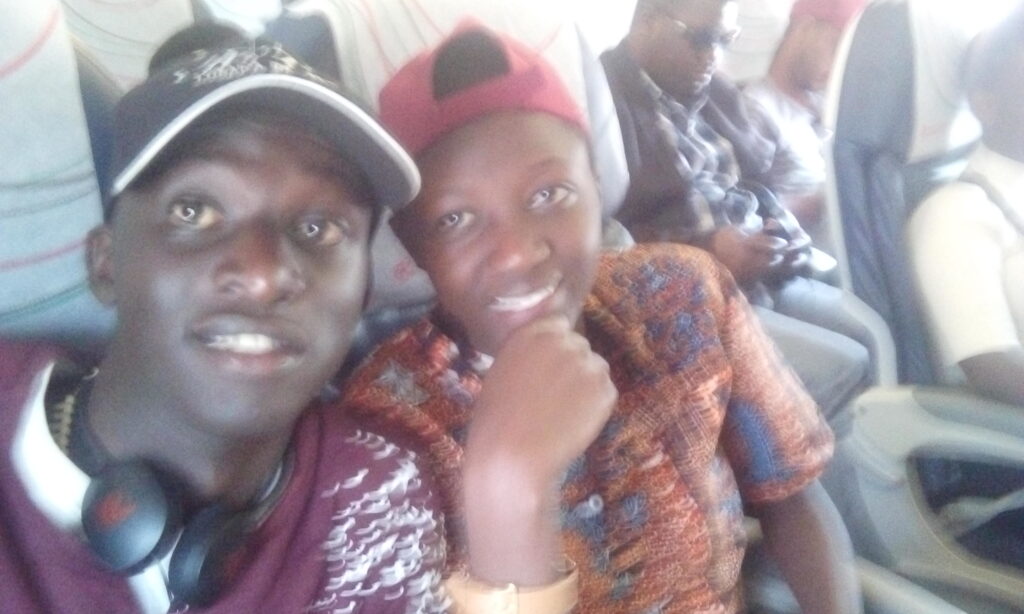
Reminder to you, dear reader: whatever it is that is looking like it’s not making sense right now, I hope you keep your head up and in a couple years look back, laugh, and appreciate how far you have come.
WHILE YOU ARE HERE
Want to read more stories like this? Kindly subscribe to my blog. Big Foot Athletes is diversifying its content beyond the sports field to share lived experiences. Sports and charity will remain central to the blog’s content, but awareness and lifestyle have joined the conversation.
My book, Once I Arrived, will be out this year. It’s time you got lost in a book that tells you about the way of life in Uganda and in the USA through stories. I am excited about getting this book to your shelf.