What would you do if the doctor told you that you have three weeks to live? (Pause and think)
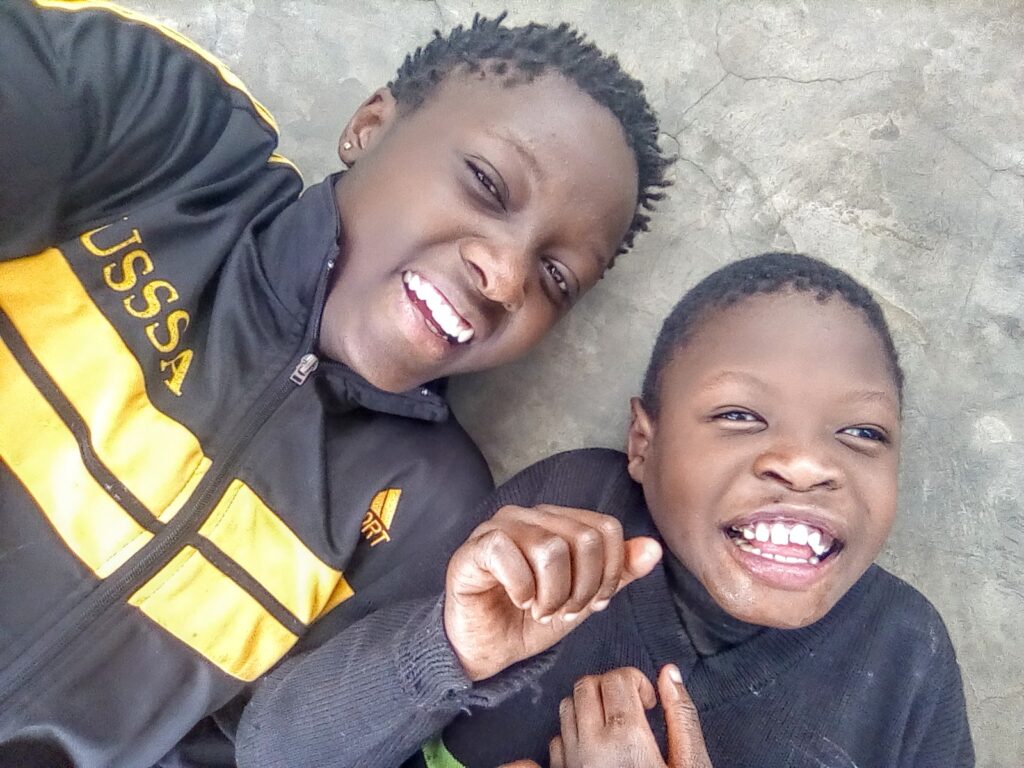
When the doctor at the Heart Institute Mulago told my father that our last born, Jeremiah, had less than a day to live, my father had one mission at hand – get this guy baptized. He ran through the corridors of Mulago, the small, paved pathways between flower beds, until he found a priest to baptize the three-month-old baby.
But before we get there, let us rewind this story. I was never the girl who played with dolls, imagining a family. I was always climbing trees, pushing tires filled with cow dung, sliding in half-cut jerrycans on slopes, throwing stones, or playing soccer. Yet, the days I stayed home with my sister, who was on the other end of my life (always crying for dolls), we found ourselves in our parents’ closet making babies out of clothes. We were particularly good at making babies out of sweaters. Each time we did this, I would carry the “baby” to my mother and say, “Mum, when will you give us a boy?” I didn’t want a baby – I wanted a boy!
Little did I know it would take over 10 years before the first boy would come. Oh, how I loved him (and still do). But you know the human mind is quick to forget. In less than a year, I was once again telling my mother, “We are two girls, and one boy – don’t you think a second boy will balance the equation?” It looks like God prioritizes children’s prayers. A few months later, my mother’s “stomach” grew bigger and her feet enlarged. And indeed, the news finally came, “It is a boy!” This was the perfect family I imagined.
Weeks after his birth, every time I called back home (since I was in boarding school), I got an eerie feeling of something not being communicated. The new boy in our lives cried all night long each day, but my parents didn’t want to tell us how bad it was. They always dismissed, “He is a stubborn baby.” But this tale soon ate them up, as on Easter Sunday (2010), after church, as my parents sat to eat, baby Je cried and cried and cried and cried and cried … (not sure how much more I can emphasize this). They rushed him to the hospital, and the doctor dismissively said the same old statement, “It’s just a child’s cold. At worst, a pneumonia case.” He went ahead to prescribe more medication for the flu and cough.
Unfortunately, the crying increased each day that passed. My parents found themselves in one of the cubes at Rugarama hospital. Every test was run – think of any test in the medical world. The results – Negative! Baby Je was admitted so that the doctors could monitor him.
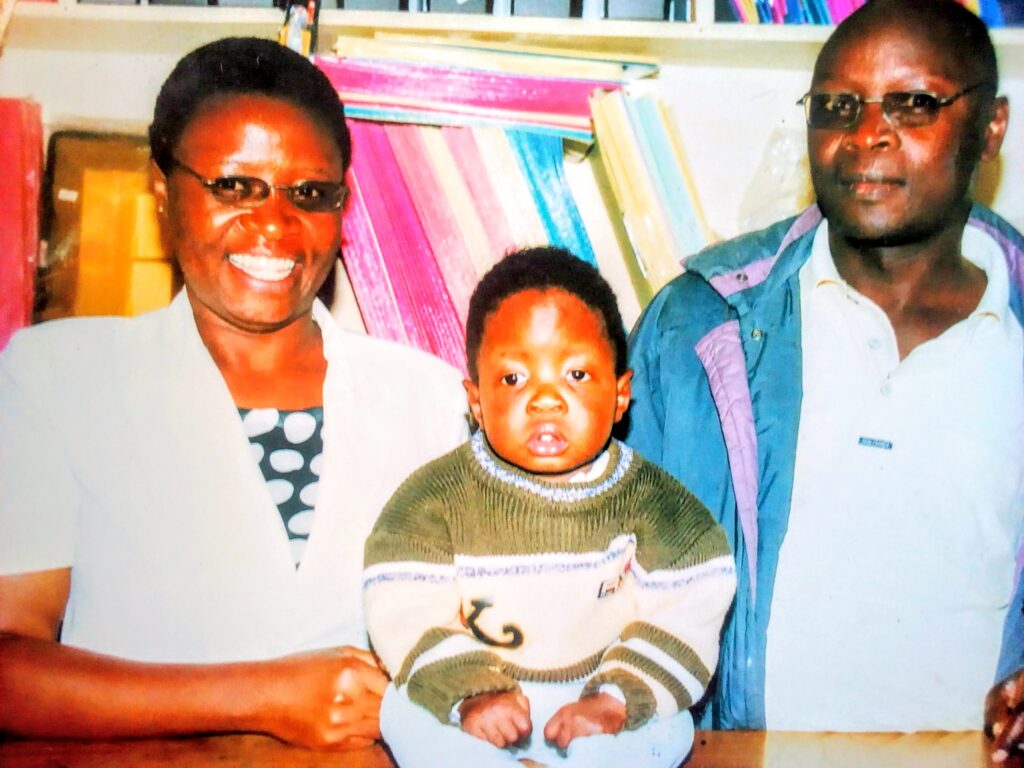
One evening, an intern doctor, Dr. Nkerat walked by their room. He was a young and new face at the hospital, probably deployed through the government medical internship program. He greeted my parents and had a sneak peek at baby Je, who lay helplessly on the hospital bed. He asked to speak to my parents after consulting with Dr. Mateeka. The two had one message to deliver: “He is dying. He has a heart issue. Get to Mbarara hospital as soon as you can.” The two doctors couldn’t pinpoint what heart issue baby Je had, but all they knew they had stared at death, surrounded by love.
We had a Corolla Car which my parents had bought after their wedding in 2008. My father drove it like a madman from Kabale to Mbarara. For a journey supposed to take two hours, he completed it in less than an hour. More tests were carried out, and it was confirmed that the young boy had holes in his heart. Still, it wasn’t conclusive on how many holes there were. Unfortunately, Mbarara hospital couldn’t handle this case, so it referred my parents to Mulago hospital – a place most people are quick to call the final destination.
Upon arrival at Mulago Hospital, the message was loud and clear: let this young man go. More tests were carried out, and it was confirmed baby Je had three holes in his heart. Baby Je was admitted to Mulago Heart Institute. I realized that as I grew older, I became an avoidant of the horrific experience my mother had to endure while at the Institute. Baby Je had been given three months to live. It’s like my mother was a bride to death, nervously waiting for the hour it would walk through the doors and pick her son.
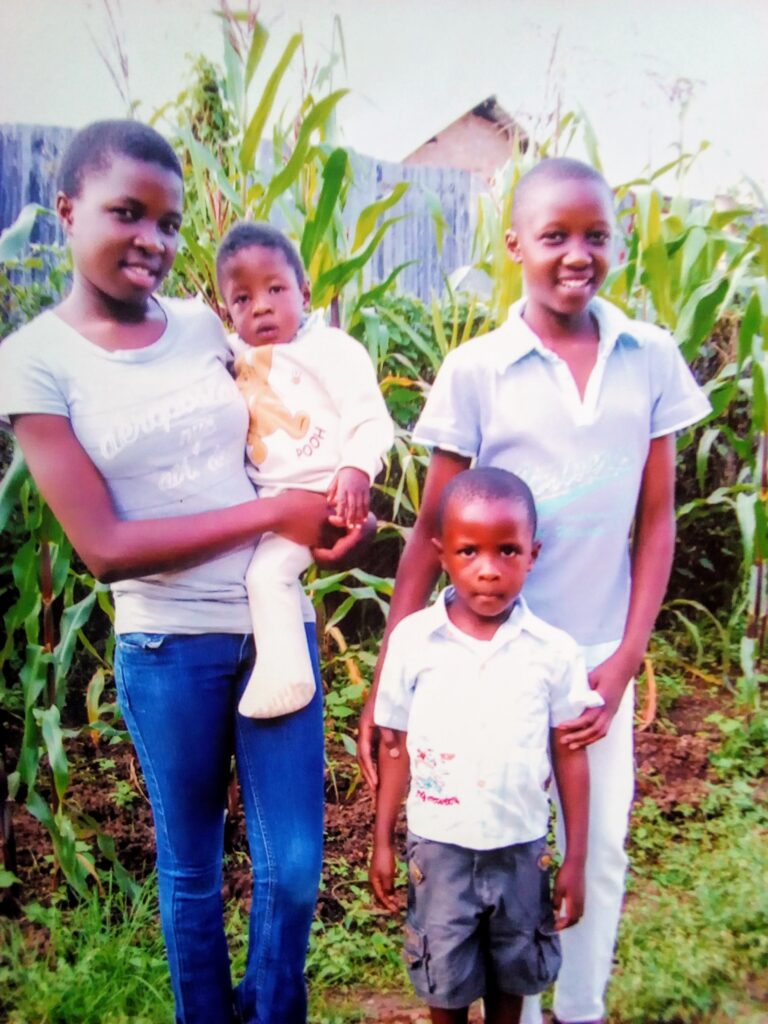
On the other hand, when my sister and I returned home, one by one, things had vanished from the house. One day it’s the chairs, the next day it’s the car, until we were left with only saucepans and plates on which we could eat and get energy to face the pain that came the next day. My sister and I had a strong “beef” over who would eat the top and bottom slices of bread, but now even the middle part of the bread was no more. My father, a Mugisu man who previously barely spoke any words in Rukiga, was now a pro at it. He spent each day moving from radio station to radio station, political office to office, church to church, school to school, home to home, shop to shop – begging for even 500 UGX to add to his collections.
Day one, day two, day three, day four … a week, fortnight, month, two months passed and baby Je was still alive waiting for his hour. Unfortunately, my parents never allowed us to see him. In fact, even when people visited him at the hospital, they were given a choice not to see him. In my mother’s words, “Each day, he was losing weight. I had to carry him using a pillow. You could see all his bones. His lips were navy blue.”
As the search for UGX 90m ($25,700) was breaking my father, my other brother was crying each day, demanding to see his mother. My father took him to the village to be with our grandmother. This is another whole story for another day. My grandmother “pampered” this boy. Unlike us, who used to go to the village to dig sweet potatoes in the hills (Omulukili), this boy was at home eating three eggs at every meal and a chicken each day (God bless my grandmother).
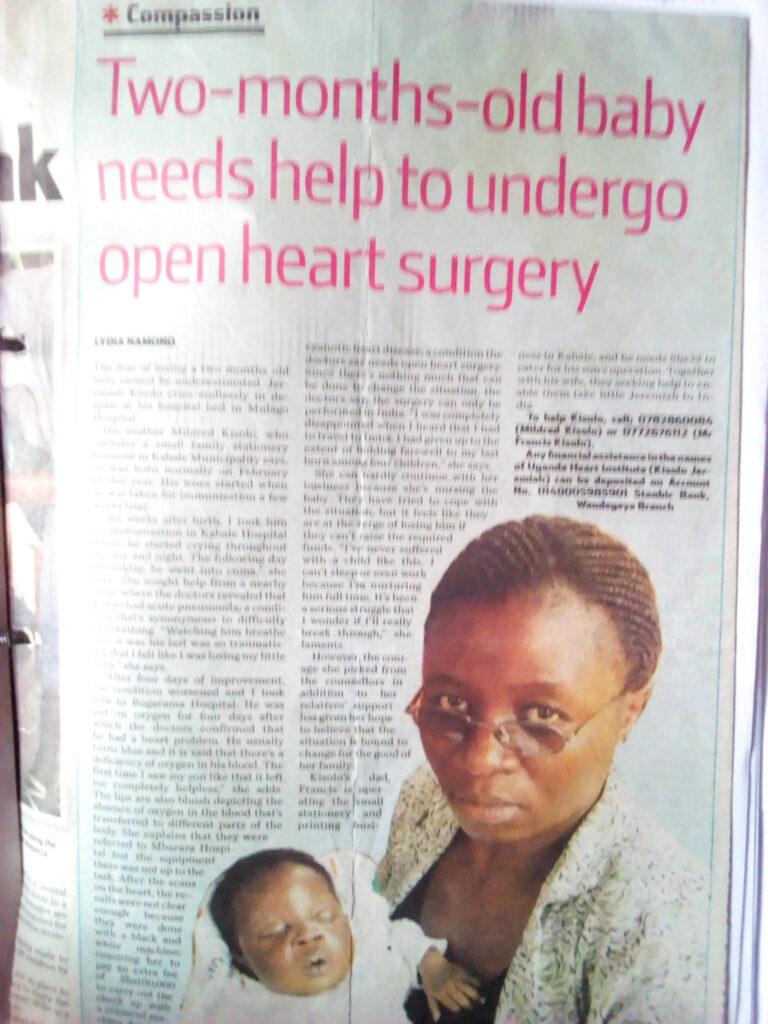
The last straw to my father’s hope, having sold all the property he owned, finally came through. At the time, we owned a face of a hill in Kekubo Kabale, three two-bedroomed rentals which were under construction, and our huge house (which caused other kids to envy us). Little did they know that we were living on borrowed time, as most of it had been sold at a giveaway price. My father wrote a letter to the parliament of Uganda seeking support. He received a measly UGX 100,000 ($28). The money wasn’t adding up to the effort my father had put in.
One evening, drenched in depression as my father sat behind his bookshop counter (my parents owned a stationery shop), a phone call came through from a friend from the Rotary Club of Kabale. He had an offer to make. The doctors had recommended baby Je to be taken to India, but the person on the other end of the call said, “Mwami Kisolo, we want to help you, but you must take that child to Italy, not India.” This posed an ethical dilemma and conflict over what the public knew. Jeremiah’s story had been run in newspapers, on the radio, every media outlet, saying that he must go to India. But when a man is drowning, he will even grab the weak grass at the edges of the water body for support.
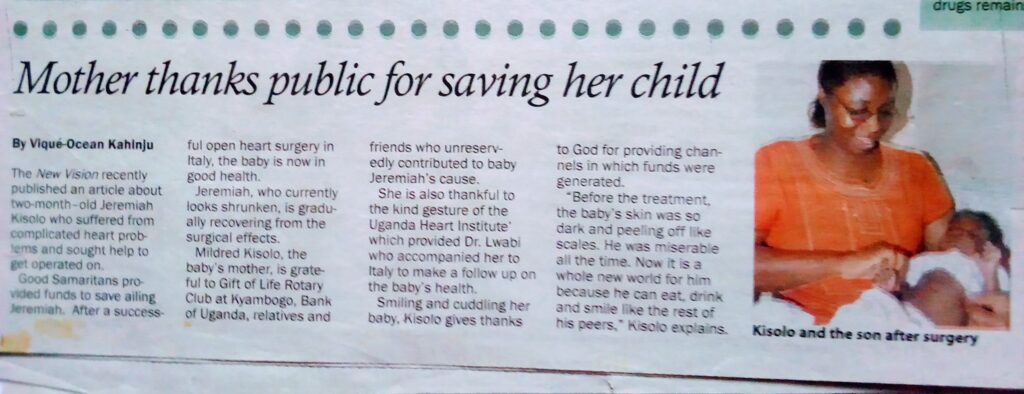
The Rotary Club of Kabale at once started the process of getting baby Je ready to fly to Italy. Fortunately, through my father’s sweat, they didn’t have to cover the whole bill, as he had gathered some money already. They topped up, and after three months, my mother, baby Je, and a doctor were on board Emirates and off they went.
If you are ever looking for modern-day miracles to quote, I permit you to use my brother. You remember how many times he has been declared “soon dying.” It wasn’t any different on this day as they set off. Nobody believed he would land in Italy alive. In fact, the jam on Entebbe Road (the express highway wasn’t constructed yet) was so heavy that they arrived late for the flight. The triad landed safely (and alive) in Italy. The doctor returned to Uganda. My mother and baby Je spent an extra day in Bergamo Hospital without any procedure done to him.
Long story short, on the second day, the only day my mother ever says she also saw death, despite the fact that she had been carrying a skeleton for nearly a month, she panicked and ran out crying for help from the doctors. To her ignorance, the doctors had been monitoring them, and by the time she set foot in the corridor, wailing, a wagon of nurses and doctors was running toward her direction. Baby Je was taken, and for the next two days, my mother didn’t know where her baby was. The doctors kept re-affirming to her that he was well. She often says, “I thought he had died, but they didn’t want to tell me.” She spent the two days crying in her room. Her neighbor, who didn’t speak English, was in the same fragile state as my mother. They always sat and cried together.
A knock came through on her door on the third morning. A nurse told her that she could finally get to see baby Je. You know how, when you go to the hospital to see a sick person, you just walk in and sit in the chair opposite the bed and watch them in that painful state, my mother thought it would be the same old story. To her surprise, they spent the next 30 – 40 minutes walking through disinfectant machines, cleansing rooms, dressing up in medical gowns, before they finally arrived at a heavily glassed room where she would be told to look past all the tubes and silent machines – there lay her baby with his chest wide open. Every time she narrates the story, she says, “I saw his heart pumping.” This would be the case for the next five days, as she had scheduled visits to see him through the glass wall.
“Why don’t you people want to be doctors?” My mother always asked almost every time she saw us. This was after her return from Italy. Addicted is an understatement; she couldn’t stop watching “The Gifted Hands: The Ben Carson Story.” Each time she watched it, she said, “Doctors are miracle workers” – a statement I believe she will always defend. Unfortunately, I was always the worst in my chemistry class, my sister was always reading novels in science classes (she turned out to be a lawyer), and my kid brother didn’t even have a direction then, and when he finally did, he wants to be an engineer.
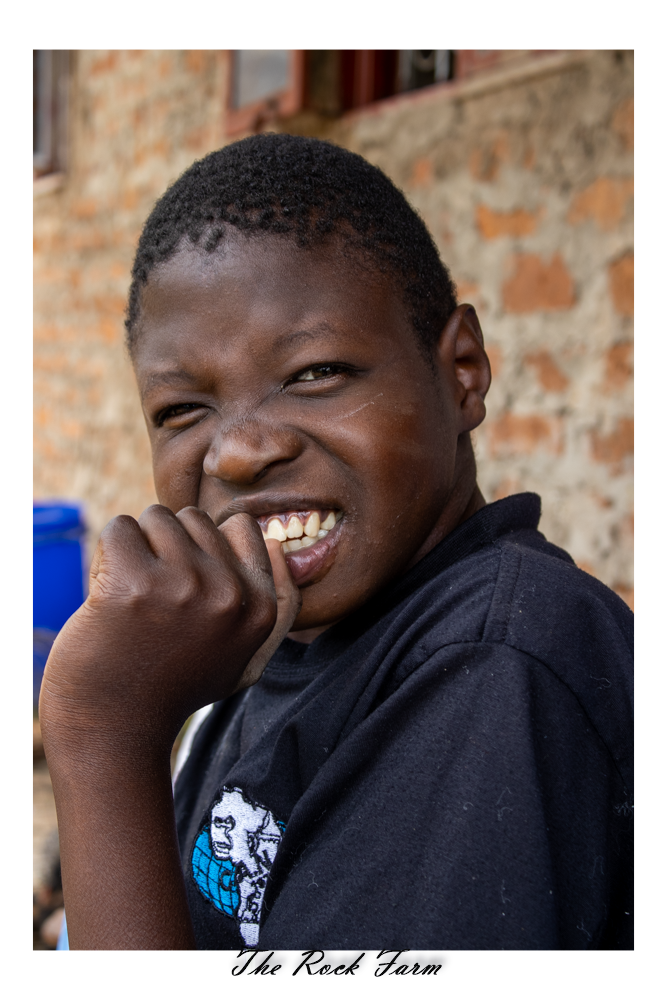
Baby Je is now 15 years old. He has impaired speech (during the surgery, the brain didn’t receive enough oxygen), he is on the autism spectrum and takes medication each day of his life to keep him afloat. But you want to know the most beautiful thing that has happened beyond baby Je. Three years ago, my mother, frustrated by how autistic children are treated in society (having seen the treatment baby Je received in public spaces), set out to create a group of mothers who care about their children on the autism spectrum.
Inspired by her own journey of raising a special needs child, she sensitized through villages in Kabale, to let families know that an autistic child is not a devil-possessed child (the belief in most African societies). Hence, the formation of One Love Autism Children’s Center, Kabale.
My family plunged into utter poverty following the search for funds to treat baby Je. Indeed, the statement, “Every Ugandan is one medical bill away from poverty,” is true. If you have read my stories, you are familiar with how I was always dodging the deputy headmistress to avoid that reminder, “Where is school fees?” And for the people who envied the little wealth my parents had amassed, now stared in awe as we moved from the huge house to a home on less than 15 ft by 15 ft.
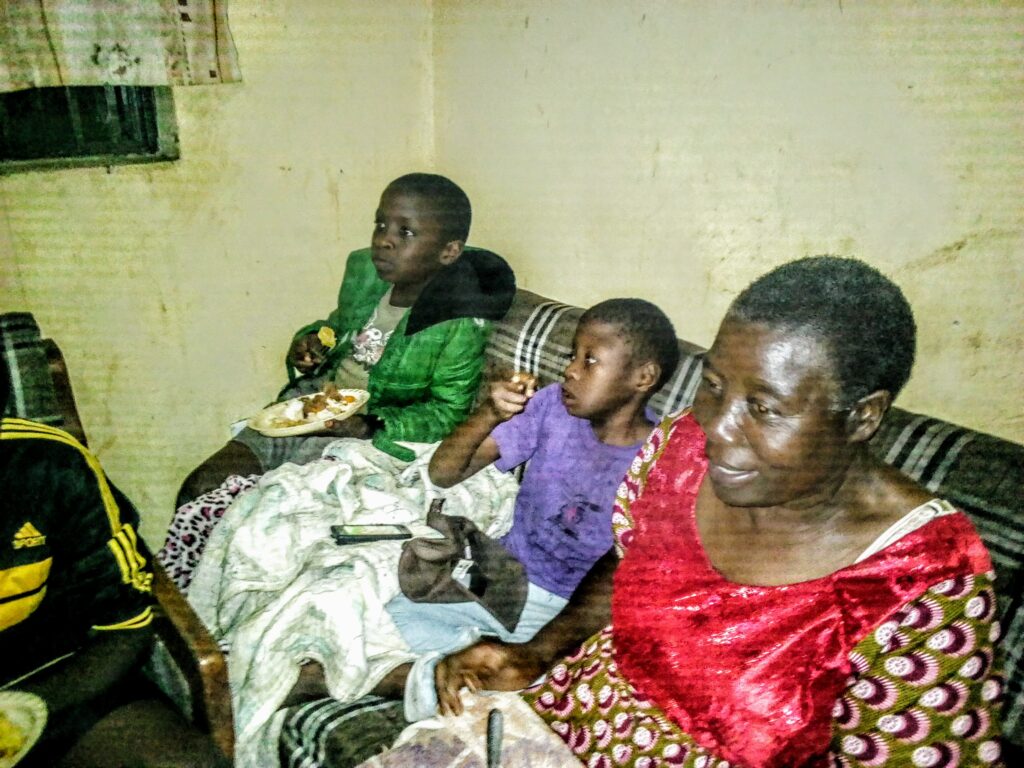
But in this poverty, my mother was determined to show love to children on the autism spectrum and their families. For every UGX 200 she received, she saved half of it to use in mobilization activities. Slowly, by slowly, what started as a shunned space became a safe space for families with special needs children (autism and neurodevelopment issues) in Kabale. It’s been three years since she founded this, and each year, more mothers join and are not ashamed of having a child on the autism spectrum.
Within the space, the families are able to receive medical care at a subsidized fee. My mother managed to talk to a few doctors in Kabale who offer medical support to these families at a reduced price. She ensures that each mother understands that having a child on the autism spectrum is not their fault, contrary to the accusation that women are the cause of autism. Most special needs children’s mother’s husband’s run away, fearing the “curse.”
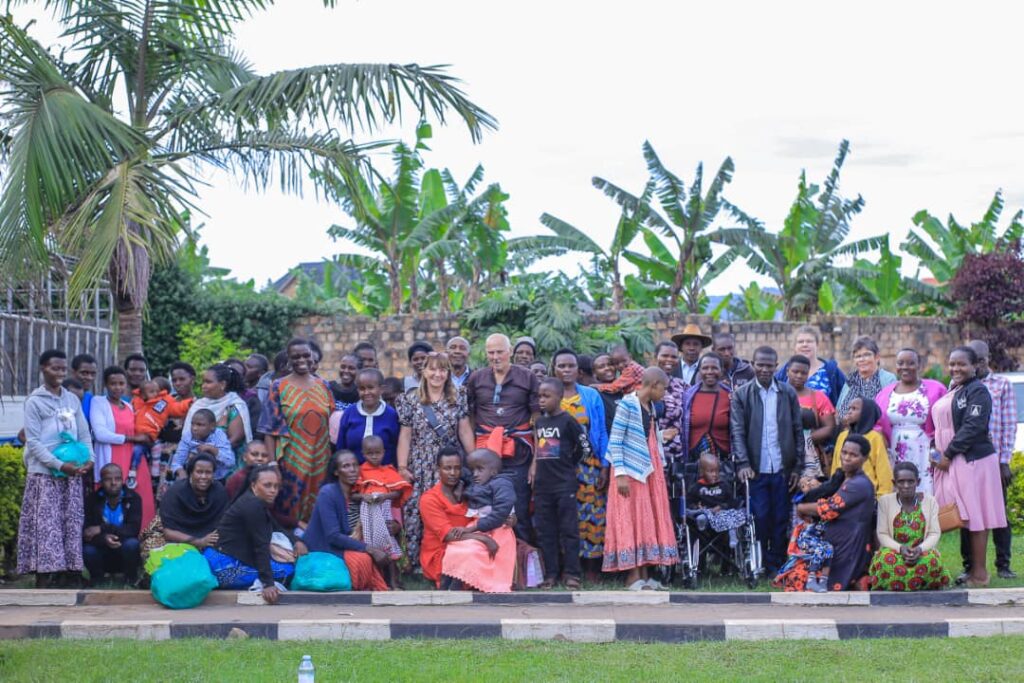
Other benefits that members have received include access to medicines through donations from Gabriela Eder, Isabella and Herman Zauscher. They also provided wheelchairs to the organization.
Baby Je will be celebrating his 16th birthday on the 16th of February. Probably he won’t even know it, but he will see a cake, with candles and soda, which will tell him that it’s a special occasion. He will be excited for yet another day to eat cake and drink soda.
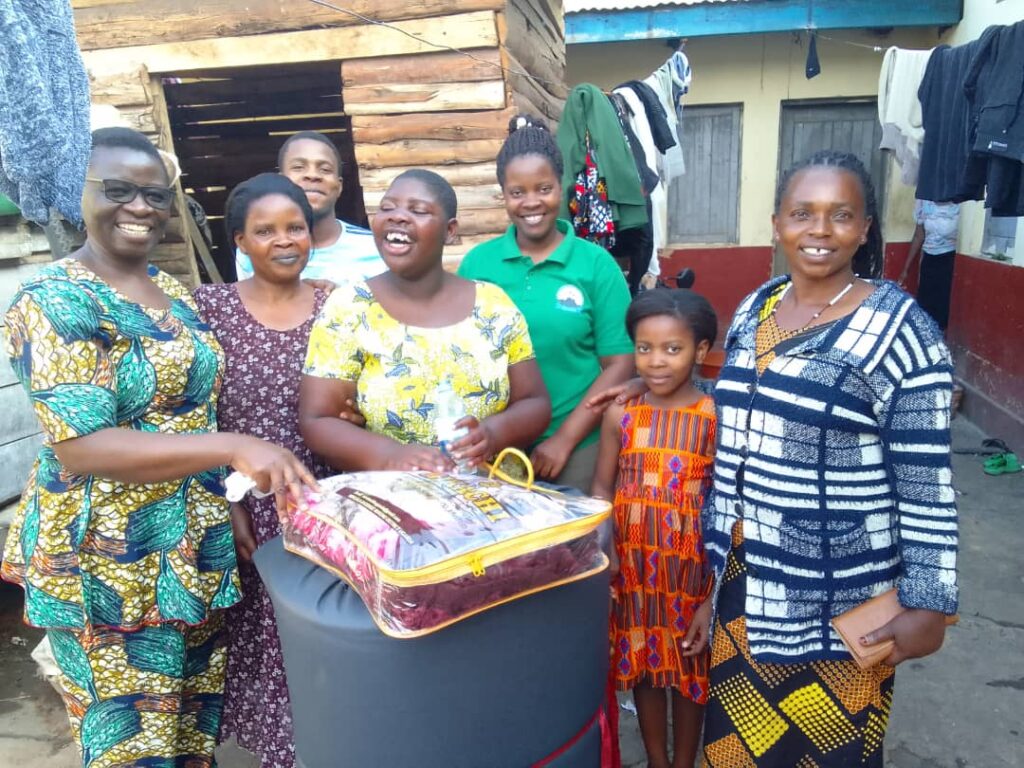
As he celebrates his birthday, I am kindly requesting your support for One Love Autism Children’s Centre. One Love seeks to make this donation a yearly charity donation drive. The donations will support the organization, the special needs mothers, and the children on the autism spectrum and neurodevelopment complications, in supporting them to access basic needs such as food, beddings, clothes, medical support, and mobilization activities. I won’t drag this on, but some days are heavy like the day my mother told me, “One of our children starved to death.” I call you to join me in this yearly donation drive.
Contributions can be sent to Twinomugisha Midred at +256 782 860084 (MTN) or +256 702 860084 (Airtel).
Website: https://www.oneloveautismchildrenscentre.org The website has the organization’s wish list. You could donate in kind as well.